Fordell Hendersons

In 1374, William Henrison, Sr., was chamberlain of Lochmaben Castle near the town of Lockerbie. Another Henderson name from the period was Henry the Minstrel (or Blind Harry), perhaps the best known of all those wandering bards who recited the exploits of their countrymen. Through his poetry, he helped to broaden the stature and image of William Wallace from a statesman and military strategist into a folk hero.
In the fifteenth century, Edinburgh experienced new prosperity and the Lowlands transformed peace into commercial growth. From this stock came the establishment of Henderson of Fordell. The name “Fordell” was first mentioned in 1221, when Hugh de Camera gave a toft (a homestead and additional property) of his lands to the monastery of Inchcolm, in gratitude for his safe return from the Crusade.
Thomas Henderson was the clerk of Inverkeithing Cocket in 1406. He was the father of John Henderson, customer and bailie of Inverkeithing from 1448–49. His son was Robert Henderson, a burgess of Edinburgh. In 1486, Robert acquired the lands of Fordell from the estate of William de Airth.
James Henderson became Lord Justice Clerk (or Lord Advocate) of Scotland in 1494. It is for James for whom the lands of Fordell were erected into a barony in 1511. James Henderson was killed at the Battle of Flodden in 1513, along with his eldest son, and King James IV.

George Henderson, 2nd of Fordell, was admitted as a Burgess and Guild Brother of Edinburgh in 1520 and served as provost of the city. George was killed at the Battle of Pinkie on “Black Saturday,” 10 September 1547, along with his oldest son William.
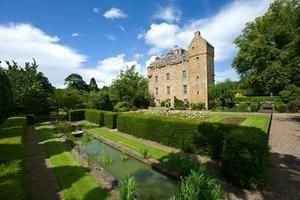
William’s son James built Fordell Castle in 1580 as it stands today. He enjoyed favour at court and married Jean, the daughter of Sir William Murray of Tullibardine. This union brought the family into a pedigree which included the royal Stewarts and Plantagenets, William the Conqueror, Malcolm Canmore and others.
Alexander Henderson and the ReformationPerhaps the most famous member of this branch is Alexander Henderson (1583–1646), regarded as the leader of the Reformation in Scotland after John Knox. Born in Fife, he went to St. Andrews University, where he became a professor of philosophy in his 20s. Along with Johnston of Wariston, Alexander Henderson was largely responsible for drafting the National Covenant in 1638. By acclamation, Alexander was chosen moderator of the historic assembly in Greyfriars’ Church in Edinburgh, which completely reformed the Scottish Kirk on Presbyterian principles and abolished Episcopacy.
The Australian ConnectionIn the 1840s the British Government began to organise and encourage the Scots to emigrate. John Henderson, who traced his ancestry to Sir John Henderson, 5th of Fordell, emigrated to Australia in 1839. He acquired land in the Illawarra district and married Margaret Dunsmore in 1843. They moved to the Goulburn district and established the Roslyn estate.
When John died in 1870, Margaret appointed their second son, John (Jack) Cunningham, 22, as manager of Roslyn. Every member of the family worked hard — they hand-cleared the land with axes, put the plough to it and built miles of fencing. They also formed an all-brothers cricket team.
Dr. John William Phillip Henderson descended from this line. By appointment of Lord Lyon, he was recognised as the male heir to the Baronet House of Fordell. Lord Lyon erected into a single clan a number of seemingly unrelated families whose only real link is that they all share a common surname. This is how our current Chief of the Name and Arms of Henderson, Dr. Alistair D. Henderson, is descended from the Fordell line.
Last updated: March 21, 2026